
For parents, the idea of sending a teenager on an international service trip can bring a mix of excitement and questions. Will they be safe? Will they be well supported? And perhaps most importantly, what will they really take away from the experience?
Reyna Eastwood understands those questions from several perspectives.
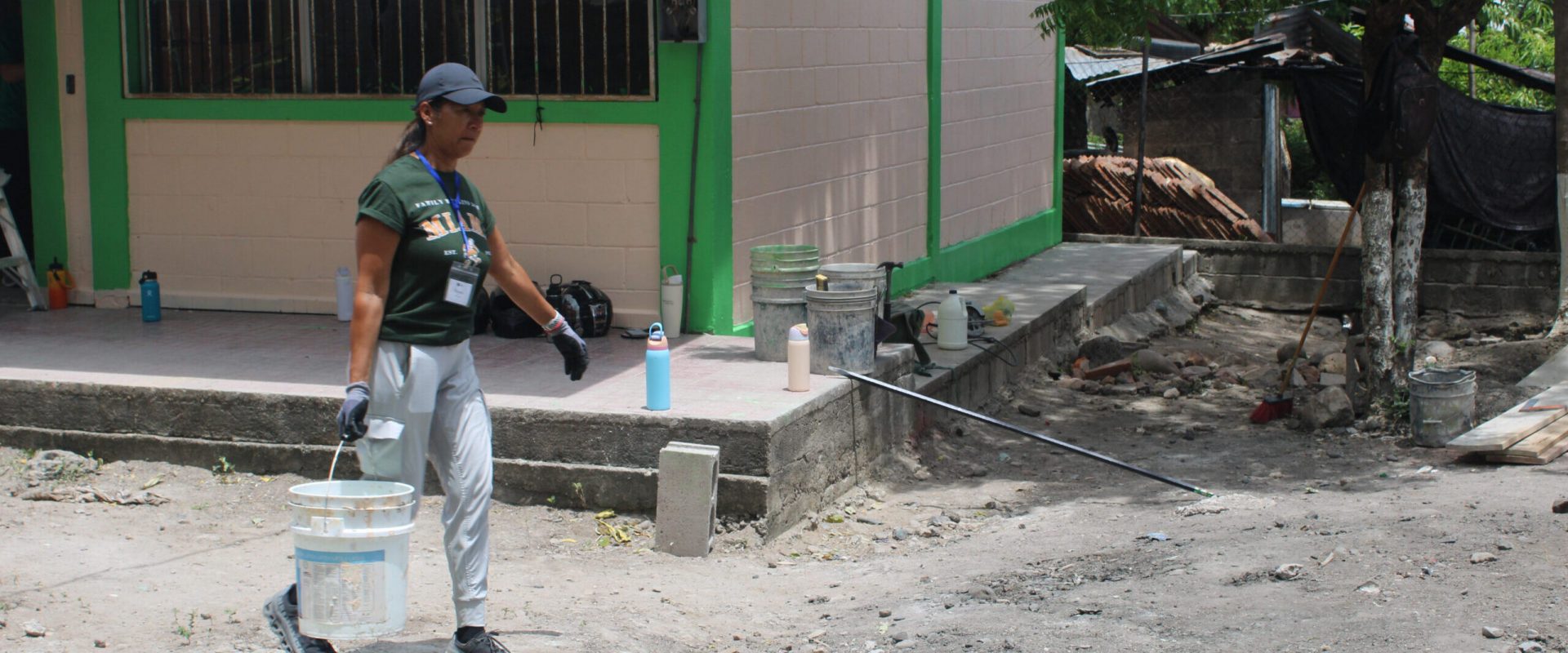
She was born in Honduras and moved to the United States when she was 10. Today, she is the mother of three teenagers who have participated in service trips of their own. This summer, Reyna joined School the World as a chaperone on our July Service Learning trip to Honduras, giving her the opportunity to see firsthand what students experience during a week in one of our partner communities.
It was Reyna’s first School the World trip, and she came away impressed not only by what the students accomplished, but by how they engaged with the people and community around them. “They showed up really well, just really genuine and wanting to be there,” she said. “Ultimately, they were all in sync when they were there.”
One of the things Reyna most wanted to observe was how students from the United States would respond to a place and circumstances that, for most of them, were very different from their own. What she saw was what she describes as young people becoming global citizens.
For Reyna, that means learning to look beyond what is happening close to home and understanding that people and communities around the world are connected. “It’s not just being concerned about what is happening here at home, but having that global view that we’re all tied together,” she said. “Just having that broadened view of the world, not just next door.”
That broader perspective did not come simply from traveling to another country. It came from working alongside community members, spending time with local children, asking questions and beginning to understand more about the lives of the people they met.
Throughout the week, Reyna watched the students form genuine relationships with the children in the community. “They were very generous with their time, with their kindness, very warm,” she said. “I saw a lot of genuine joy in engaging in that way with the kids from the community.”
The connections grew as the week went on. Children learned the students’ names and nicknames. Students played, worked and spent time with them each day. What began as a visit to an unfamiliar community became something much more personal.
That connection also changed what students noticed.
During the trip, several students realized that the community’s soccer field did not have a proper goal net. Rather than simply accepting it as something that was missing, they decided to do something about it. The students took the initiative to raise the money themselves and purchase a net for the community. For Reyna, the gesture represented something larger.
“It emphasized for me how in tune the kids were to the needs of the community,” she said. It would have been easy, she explained, to simply think, “That’s just kind of the way they play.” Instead, the students noticed something that mattered to the children they had gotten to know and found a way to help. “It was just so super generous,” she said. “A physical gift, but just such an impactful gift.”
Read the story of how soccer inspired these World Changers to give back.
Moments like these are part of what makes Service Learning different from simply visiting another country. Students aren’t only seeing a new place. They are being challenged to pay attention, build relationships and consider how they can respond to what they see.
The physical work is an important part of every School the World trip, and Reyna gained a new appreciation for just how much students put into it. Her own children had participated in other service trips, but seeing the work up close gave her a different perspective. “It was real work,” she said.
But construction and community activities are only part of the experience. Throughout the week, students also had opportunities to learn more about Honduras, the community they were visiting and the broader challenges families face.
Reyna noticed that the students wanted that context. “They were looking for deeper understanding in terms of where they were and how does this work, and what do you guys do after we leave,” she said.
Evening reflection sessions gave students space to talk about what they had noticed during the day, ask questions and better understand what they were experiencing. “The evening sessions were very helpful because I think, for the most part, their questions were answered or their observations were addressed and given some context to what they were seeing,” Reyna said.
Students also heard directly from people with deep connections to the country and community. One School the World staff member shared his personal story, while a longtime community resident talked about how the community had developed and changed over decades.
Those conversations helped students understand that the week was not simply about what they had come to build. It was about listening, learning and seeing the community as a place with its own history, strengths, challenges and hopes for the future.
For Reyna, one of the most important parts of the experience was seeing how carefully the trip was planned and how closely School the World staff looked after the students. As a parent who has sent her own teenagers on service experiences, she knows the concerns families can have when considering an international trip. “I think one of the concerns for parents is safety,” she said.
Watching the School the World Honduras team in action gave her confidence. “It gave me great comfort in seeing how the Honduran group worked and how they supported and anticipated the needs of the participants,” Reyna said.
That care showed up throughout the week, from attention to safety, meals and hydration to the design of the programming and the staff’s knowledge of the communities where students were serving. “I was quite impressed with them,” she said. “The kids are well taken care of when they’re there.” For parents, that support matters. But so does what happens within that safe and carefully planned environment.
Students are given the opportunity to work hard, step outside their comfort zones, connect with people whose experiences may be very different from their own, ask questions and reflect on what they are learning.
For Reyna, seeing all of those pieces come together was what made the experience so meaningful.
A School the World trip is designed to give students the freedom to stretch themselves while ensuring they have the structure, guidance and support they need throughout the journey. And along the way, they may come home seeing both the world and their place in it a little differently.
Explore our upcoming 2027 Service Learning trips and learn more about the experience, itinerary and opportunities available to students. View the 2027 Service Learning schedule.
Join our newsletter and get the latest updates
By signing up, you agree to receive emails from School the World, Inc..