
For School the World, monitoring and evaluation has always been about more than reporting results. Good data helps us understand whether programs are working, identify where students may need more support, and make better decisions about how programs are delivered.
Increasingly, that data is also strengthening our partnerships.
In Guatemala since 2021, School the World has worked for years with the Ministry of Education (MINEDUC) and its General Directorate of Extracurricular Education (DIGEEX) to provide flexible pathways for youth and adults who have been unable to complete their education through the traditional school system.
Our Continuing Education, or Second Chance, Program uses the government curriculum and leads to government-recognized credentials. MINEDUC and DIGEEX have helped School the World establish education centers in areas where there is demand, while School the World has traditionally hired and supported the tutors who work directly with students.
That partnership has deepened as the program has grown.
Five years of data from Guatemala have given us a much clearer picture of who the program reaches and how students progress. Our recent analysis tracked students across multiple communities and credential levels, showing that students who remain engaged consistently advance toward recognized credentials.
Those results have helped create another important change: this year, the government began funding some of the tutors serving Second Chance students.
And now, the data systems School the World built to manage the program are becoming part of the partnership as well.
School the World tutors already use an online monitoring tool to record student attendance and assessment results. That gives our team visibility not only into what students ultimately achieve, but into what is happening week by week.
When government partners saw the system, they asked whether the tutors they fund could use it too.
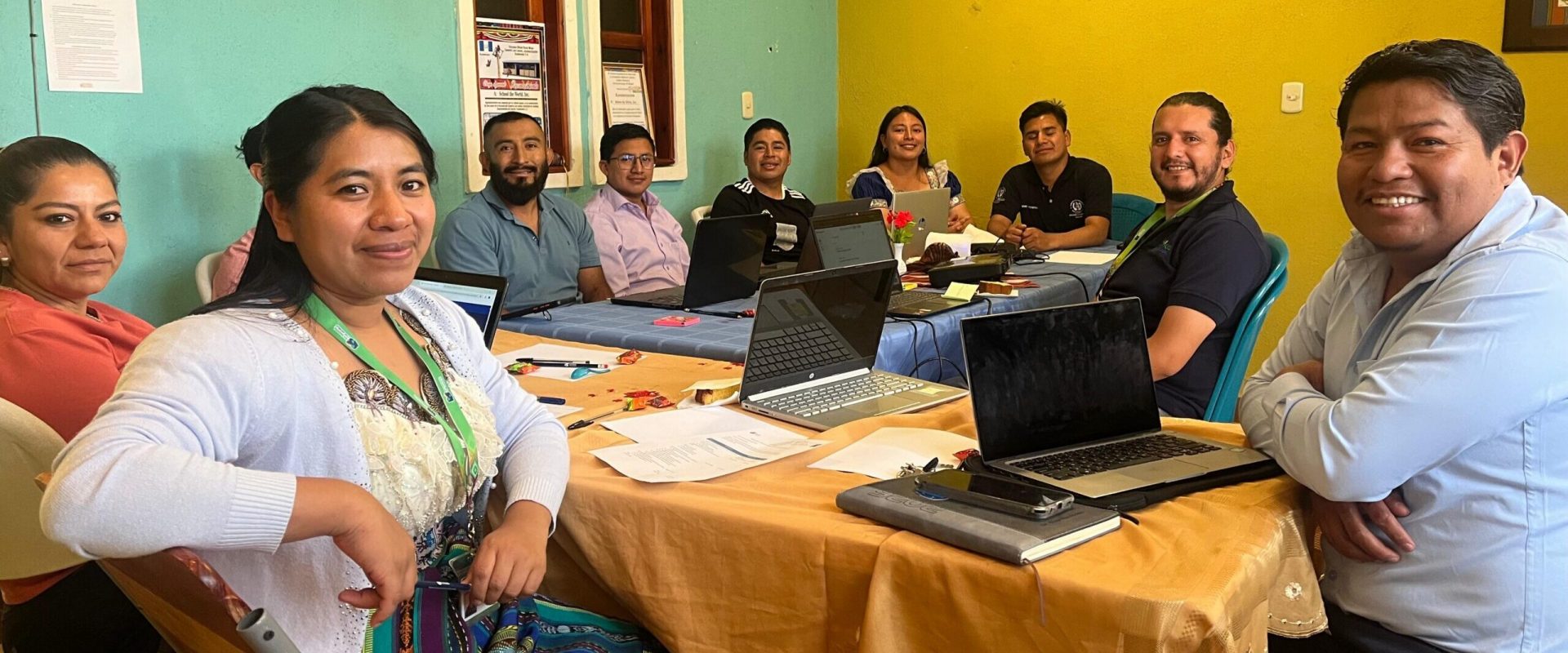
In September, those tutors joined School the World staff for training at our Guatemala office, learning how to record attendance and participation through the same system our own tutors use.
The result is a shared view of the program.
Government officials can now see attendance information from both School the World-supported and government-supported tutors. For the government-supported centers, tutors can also upload information about each session, including the session agenda or lesson plan. School the World will continue collecting assessment data for our own centers and will capture final results for the government-supported centers.
This adds an important layer of visibility. Rather than seeing student results only through a gradebook, program leaders can see whether classes are happening consistently, whether students are attending, and whether tutors are keeping program information up to date.
The system can also automatically send regular reports showing which tutors have submitted their information and what attendance looks like, making it easier for both School the World and government representatives to follow up when needed.
None of this replaces the people behind the program: the students making time to continue their education, the tutors supporting them, or the government and community partners helping make those opportunities possible.
But better information makes that collaboration stronger.
What began as a tool School the World developed to understand and improve our own work is now giving our government partners greater visibility into the programs they help deliver. And the same evidence that helps us demonstrate impact is helping inform how the program is managed, where additional support is needed, and how responsibilities can increasingly be shared.
For us, that is an important measure of progress: not simply collecting better data, but seeing that data become useful to the partners who can help successful programs reach more people.
Join our newsletter and get the latest updates
By signing up, you agree to receive emails from School the World, Inc..