
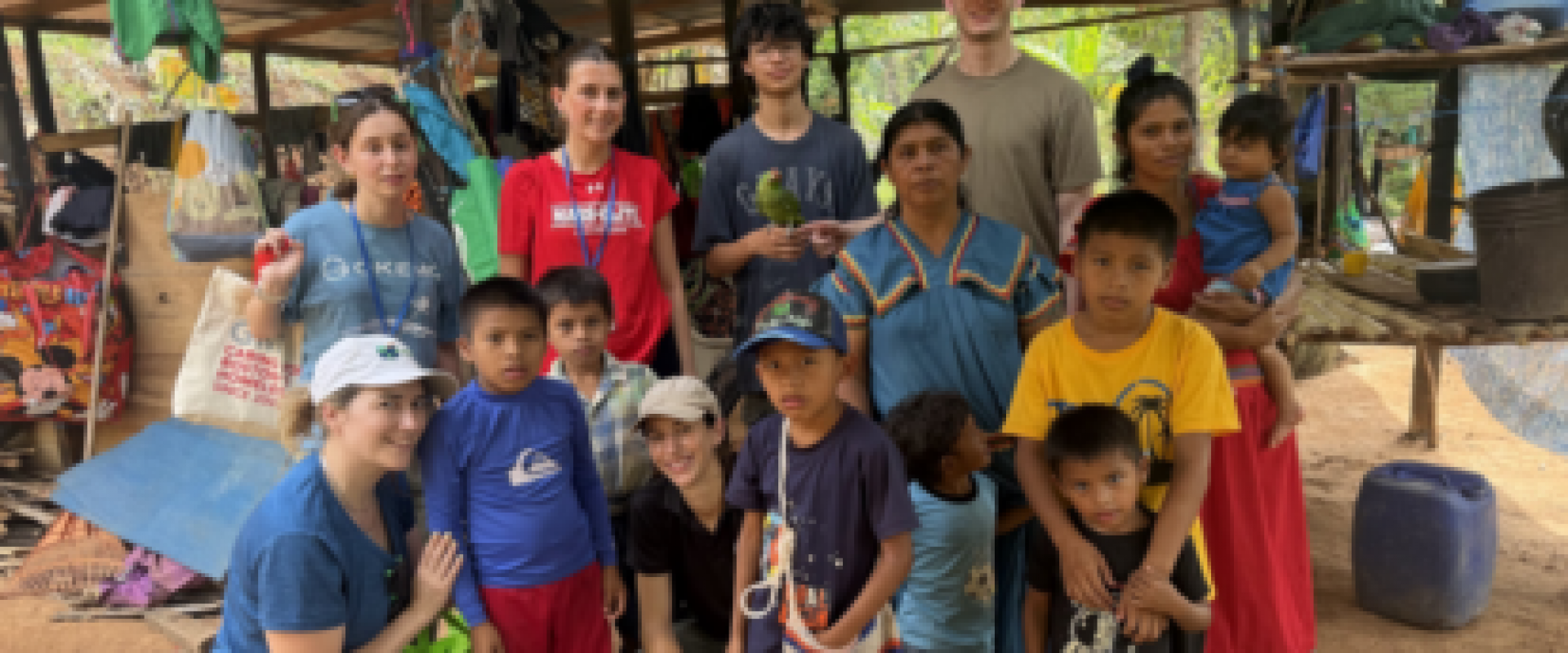
This past April, School the World World Changers traveled to Panama for a week of cultural immersion, community service, and hands-on learning alongside local families and schoolchildren. What made the trip especially memorable wasn’t only the mural painting, the classroom lessons, or the home visits, it was the presence of Peace Corps Volunteers, Thomas and Arabella, who stepped in as translators, cultural guides, and friendly faces helping to facilitate the visit of U.S. students in the Panamanian communities that hosted them.
Peace Corps Volunteers have served in Panama for decades, with the current continuous presence dating back to the early 1990s. Volunteers in Panama work across three sectors: environment, agriculture, and youth in development, and are based primarily in the Colón, Bocas del Toro, and Darién provinces, along with parts of Panama West.
Thomas and Arabella served in different sectors. Thomas, a health volunteer focused on youth wellbeing, previously served in Bocas del Toro before relocating to Chiriquí. Arabella serves as an Environmental Volunteer, working as a liaison between her community and local government agencies. Both answered a call from another Peace Corps volunteer asking if anyone could help as a translator for a visiting group.
For two days, Thomas and Arabella worked alongside School the World’s student service learning students, translating during classroom visits, home visits and helping facilitate cross-cultural connection.
Thomas described the experience as a genuine highlight of his service:
“The experience working with STW and the U.S. students was amazing. I had a great time interacting with them and helping them navigate the indigenous community. As a Peace Corps volunteer for two years in Panama, I have an advanced understanding of both Panamanian and U.S. culture, which allows for collaborations such as this one to work.”
His favorite moment came at the school itself, watching U.S. students lead activities with community members they’d never met, crossing language and cultural barriers in real time. “I was impressed by how well and how quickly the U.S. students led activities with community members whom they had never met before,” he said.
Arabella echoed that sense of connection, describing how STW students found their own creative ways to bond with local kids:
“I really like seeing how the students made an effort to connect and include with local children by playing alongside the children during recess with various games like basketball, jump rope, face painting, and stickers.”
She also pointed to a moment during a home visit that captured exactly the kind of humor and warmth that cross-cultural exchange can produce: “One of the boys at the house visit who spoke more Spanish had the entire family giggling about a rooster needing to take his parental role more seriously.”
Both volunteers spoke to the real value of having a Peace Corps Volunteer (PCV) embedded in these short-term immersion trips.
“Having collaboration between PCVs and STW is a really cool way to help STW students get to know Panama more deeply and from the perspective of a peer,” Arabella explained. “It helped increase cultural sensitivity and helped students feel more connected to the host country. PCVs help bridge the knowledge, values, and perspectives that locals bring to intercultural programs.”
Thomas agreed, noting that Peace Corps Volunteers see themselves as collaborators and facilitators first. Because Peace Corps’ approach to development centers on working side-by-side with communities, stepping into a bridging role for programs like STW’s comes naturally.
Both Thomas and Arabella, along with Tilyian, a Peace Corps Panama staff member, offered similar advice for STW students navigating a short but intensive cultural immersion:
To learn more about our 2027 schedule of Service Learning trips, visit our service learning page.
Join our newsletter and get the latest updates
By signing up, you agree to receive emails from School the World, Inc..