
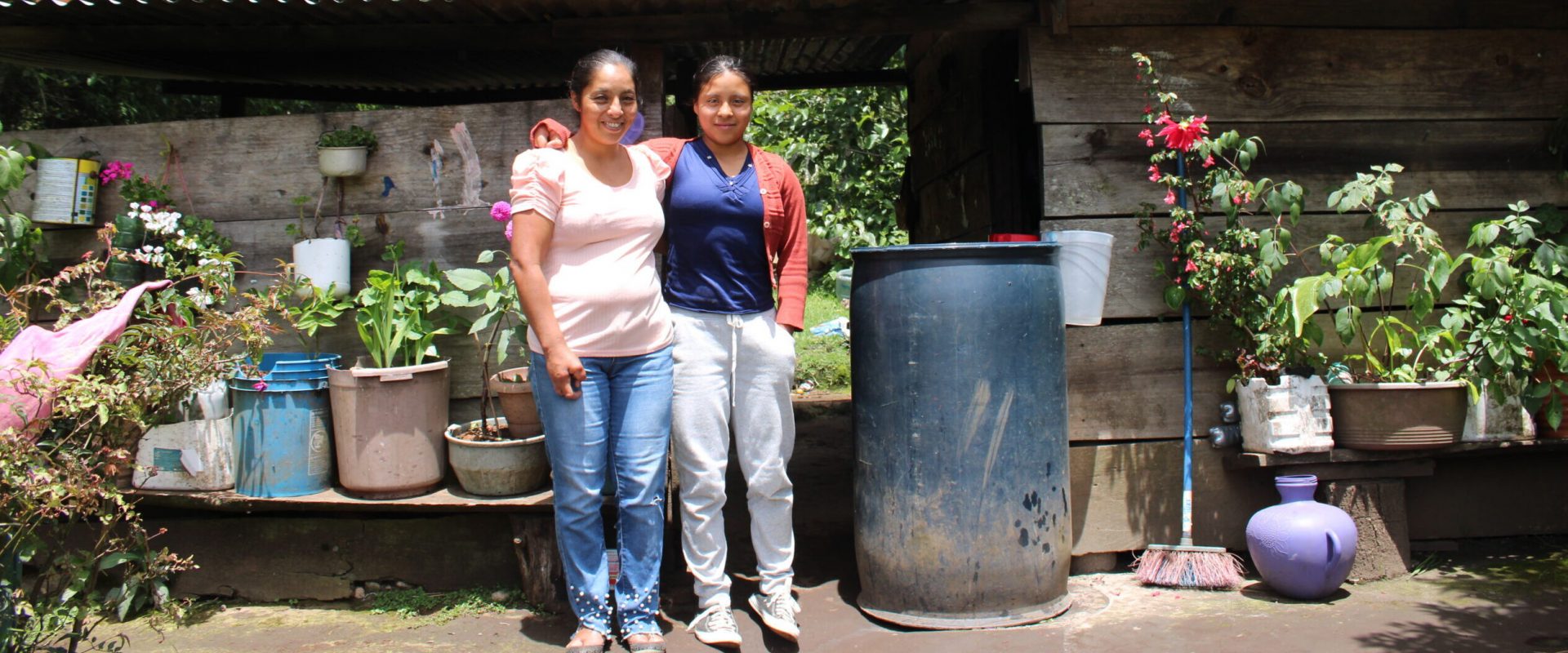
Crisanta Reyes describes her own education in one sentence: “My pencil was a hoe, and my notebook, farming.”
She wanted to keep studying, but her education ended after third grade. From a young age, she worked, tended animals, helped care for younger siblings, and learned to farm.
Years later, her daughter Amelia was preparing for a similar ending. Amelia expected to finish sixth grade and then look for work because her mother could not afford the cost of middle school. She had never imagined continuing beyond primary school.
Then she received a School the World scholarship.
Amelia is now 13 and in her first year of básico, Guatemala’s lower secondary school. Her scholarship helps pay for tuition, a physical education uniform, study materials, a backpack, crayons, and dictionaries.
Those expenses might seem ordinary, but for Crisanta they were beyond what she could manage on her own. She earns money by washing clothes and dishes, cleaning, and cooking in other people’s homes. She wanted Amelia to keep studying, but says she never could have paid for middle school herself.
That is why the scholarship mattered before Amelia ever entered a middle school classroom: it made continuing possible. Tuition, supplies, transportation, responsibilities at home, and the income a young person might otherwise earn can all make the transition after sixth grade difficult for families.
Read more about what it takes for students to keep going after sixth grade.
For Amelia, continuing school has meant more than another grade level. She and Crisanta were both born missing fingers and toes, and both have experienced teasing and embarrassment because of it. Crisanta remembers being mocked as a child and becoming accustomed to being alone. Amelia says children made fun of her too, and even now she sometimes hides her hands to avoid being stared at or ridiculed.
But Amelia is also beginning to tell a different story about herself. Her favorite class is Artistic Expression. Drawing was once difficult for her, but now it is something she loves. “I learned to draw; I learned to be happy,” she explained.
She says drawing helps her see beauty differently. She has made friends at school, plays soccer without the embarrassment she once felt, and is clear that she does not want anyone’s pity. “Intelligence is what matters,” she declares.
The scholarship did not erase the challenges Amelia has faced. It gave her the opportunity to keep learning, participating, and discovering what she can do.
Crisanta understands what education can mean because she knows what life without it has meant for her. After leaving school, she says she felt “like a nobody.” She learned to work the land because that was the opportunity available to her.
She wants something different for Amelia: “I want Amelia to become a professional.”
Crisanta is already encouraging her daughter to think beyond the expectations that might otherwise narrow her choices. She tells Amelia to focus first on her studies and on building a future for herself.
Amelia has begun imagining that future too. She wants to become a preschool teacher, and she wants to teach children to draw. Perhaps most tellingly, she says she wants to teach them not to make fun of one another.
The child who once feared making friends now imagines herself standing in front of a classroom.
School the World’s scholarship data shows that when students are able to remain enrolled, most progress successfully through middle school.
Read what six years of scholarship data is teaching us about staying in school.
Amelia is one student within that broader story. She studies at night using the flashlight on her phone because her home has no electricity, and she helps milk cows, feed animals, carry water, and do household chores before going to school in the afternoon. None of that makes school easy, but school is now possible.
For Crisanta, that difference is deeply personal. She did not get the chance to continue her education. Her daughter does. “Amelia’s life will be different; it will be a whole new story,” she proclaims.
There are many more students like Amelia who are ready to keep learning but face barriers their families cannot overcome alone. A School the World scholarship helps make the transition to middle school possible and gives students the chance to build a different future.
Join our newsletter and get the latest updates
By signing up, you agree to receive emails from School the World, Inc..