
As School the World celebrates building its 200th classroom, civil engineer Aaron Molino offers a ground-level view of what it actually takes to transform communities through education infrastructure. His insights reveal a process far more complex than simply pouring concrete and raising walls.
“I’ve worked on millionaire construction projects,” Aaron reflects, “but I’d never seen anything like this.” What makes school construction in Panama’s indigenous comarca different isn’t the engineering—it’s everything that comes before the first shovel hits the ground.
The First Challenge: Overcoming Educational Gaps in Remote Areas
Before communities can even imagine a new school, they must first see the value of education itself—a challenge compounded by systemic failures in remote indigenous areas.
“There’s a weakness where teachers don’t fulfill their work hours because they’re not supervised correctly,” Aaron explains. “There are schools so remote that supervisors have never even been there. If it’s five days a week, sometimes teachers give class only two days a week.”
The result? “The educational level of a child in these remote areas versus those in the city is an abysmal difference.” This gap creates a vicious cycle: when education quality is poor, communities question its value. When they question its value, they’re less likely to invest their time and labor in building better facilities.
Getting school directors and teachers to engage with School the World’s programs requires first addressing this fundamental skepticism. Aaron’s job begins with showing communities that better infrastructure—combined with accountability—can break the cycle.
Navigating Political and Social Disruption
When Aaron started working full-time with School the World in February 2025, he inherited six projects funded by a Mormon church partnership. None had been visited. His immediate task: travel to each community to determine which ones wanted to work with the foundation.
Then the teachers went on strike. The nationwide protest centered on pension reform that would reduce public servants’ retirement benefits. Teachers, who unlike private sector workers when they strike are at lower risk for being fired, walked out en masse.
“When I started looking for these schools, they were on strike—both teachers and directors. None wanted to hear about projects,” Aaron recalls. “They were focused on being able to revoke the pension law. So that made it difficult for me to finalize projects.”
The approval process for each school typically takes one to two months and requires active participation from school directors. “There are processes that I don’t do—the directors do them. So if they’re not interested in carrying out that process, it doesn’t move forward,” Aaron explains. “Many told me, ‘Engineer, yes I want to, but let the strike end.’”
Making matters worse, the strike created physical barriers to Aaron’s work. “I live in Chiriquí right now. From Chiriquí I couldn’t go to the comarca because there were areas blocked by police, by border agents,” he says. His solution required remarkable persistence: “What I did was transfer—I’d take a bus as far as it would go, then another transport, then another transport, to be able to fulfill my duties and reach the communities.”
The silver lining? “By the time the strike ended, many of these processes were already advanced.” Aaron’s refusal to wait meant projects could move forward immediately once teachers returned to work.
Building Community Buy-In: The Sweat Equity Challenge
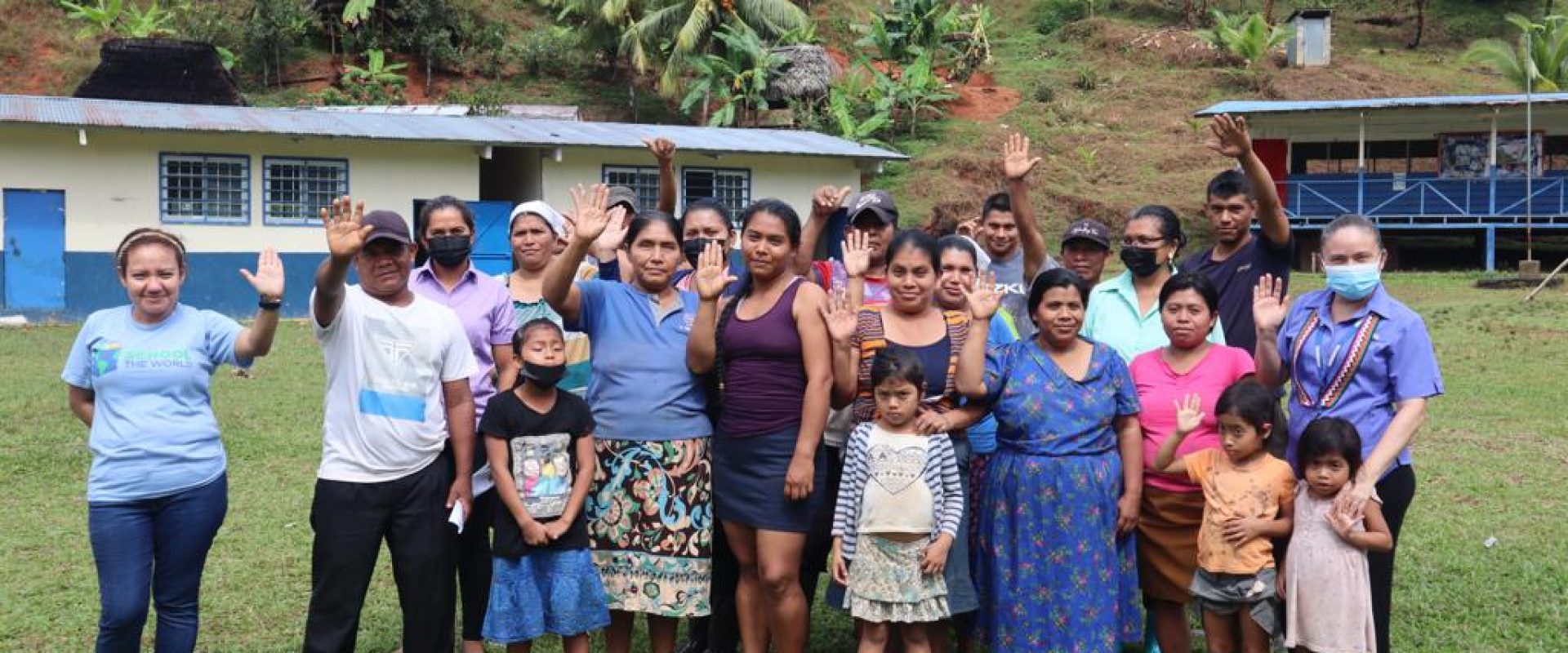
School the World’s model requires communities to contribute their own labor. For Aaron, this means helping parents and community members see beyond immediate hardships to understand their investment in their children’s futures.
“There comes a moment when not everyone has the same feeling, and that can be frustrating,” Aaron admits. In communities where adults may have limited formal education themselves, where daily survival takes precedence, convincing families to contribute labor to a school project requires building trust and demonstrating tangible value.
This is where Aaron’s personal background becomes crucial. He grew up in these communities. He crossed the same rivers, walked the same muddy paths, experienced the same educational deficiencies. “I feel very happy that I’m working in indigenous communities,” he says. “Exactly where I’m working are communities like mine.”
His credibility isn’t just professional—it’s personal. He can speak to parents not as an outsider promising change, but as someone who lived the transformation education made possible. His mother was one of only two out of twelve siblings to earn a university degree. His father, who completed only sixth grade, worked multiple jobs—boat driver, security guard, tailor, lumberjack, cowboy, carpenter—to ensure all four of his children could study. All four are now professionals.
“Both my mother and father were clear that the way forward was through education,” Aaron explains. “They made that commitment even before I was born—that their children would study and better themselves.” Now he helps other parents make that same commitment, brick by brick.
The Reward: A Different Kind of Construction
Despite the complexities—or perhaps because of them—Aaron finds meaning in this work that he never found in private construction. “This is teamwork where we all row toward the same objective, and that makes this something great,” he says.
He credits his School the World colleagues with supporting him through the learning curve. “I’ve received support from many who have been attentive to my performance in this role. I wouldn’t have achieved the objectives we set last year without the team.”
When Aaron received School the World’s Above and Beyond Award, he immediately called his father to share the news. His father’s response: “I feel like they congratulated me too.”
It’s a fitting sentiment for work that requires an entire community—from parents contributing labor to teachers returning from strike lines, from engineers navigating roadblocks to directors pushing paperwork through bureaucracy. Building 200 classrooms isn’t just about construction expertise. It’s about patience, persistence, and an unwavering belief that education can transform lives.
Aaron knows this firsthand. He swam across rivers to get to school. Now he helps ensure the next generation won’t have to.