
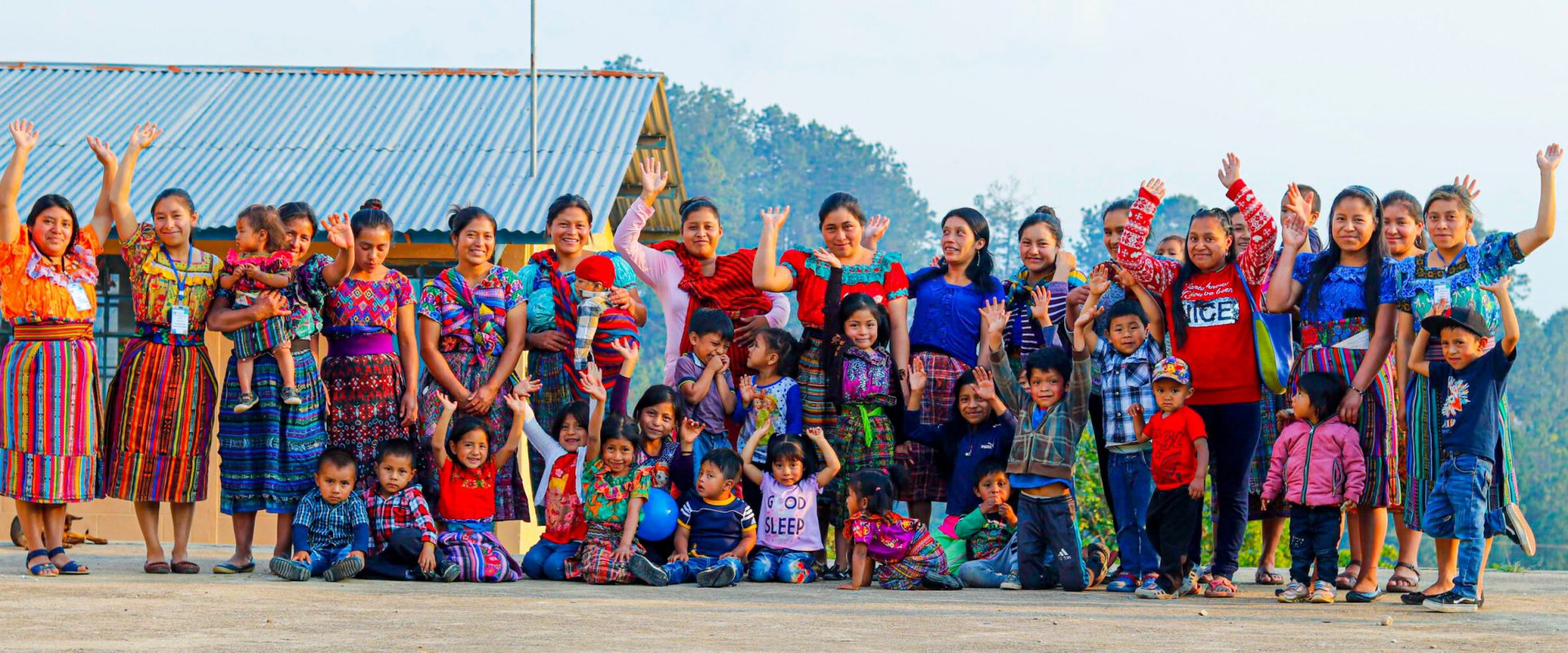
For International Women’s Day 2026, School the World marks the occasion by sharing new research exploring how education transforms the lives of women in rural Guatemala.
Conducted in partnership with the Centro de Investigaciones Educativas (CIE) at Universidad del Valle de Guatemala (UVG), the study examines how women participating in educational programs experience personal transformation—and how those changes extend to their families and communities.
The findings will be presented at the Comparative and International Education Society (CIES) 2026 conference later this month in San Francisco.
What the research reveals is powerful: education does not transform lives in a single moment. Instead, it often begins with personal restoration and gradually expands into greater confidence, expanded opportunities, and stronger participation in family and community life.
Between 2022 and 2024, researchers analyzed life stories from 27 women and girls aged 8 to 46 participating in School the World’s education programs in rural Guatemala.
Participants included:
Using a qualitative interpretive approach, the research explored how women describe the meaning of their educational experiences and the changes that follow.
Rather than focusing only on academic outcomes, the study examines how education reshapes confidence, aspirations, relationships, and leadership within communities.
Across the testimonies, a clear pattern emerged: transformation often begins at a deeply personal level.
Many women described experiences of interrupted dreams, often caused by poverty, gender inequality, or limited access to schooling.
Education allowed those aspirations to re-emerge.
One young participant expressed it simply:
“I want to fly and be someone in life; not just get married and be a housewife.”
For some women, the turning point came through a scholarship. For others, it was being invited to take on a new role in their community, such as becoming a Tijonel.
Sometimes the change began with something even smaller but equally powerful: a teacher’s encouragement.
“My teacher told me, ‘Don’t be afraid. With me, you will learn.’”
These moments—being invited, encouraged, or given an opportunity—often became turning points that opened new possibilities.
As women re-entered education, many described a gradual transformation in how they saw themselves.
Learning to read, write, or complete basic schooling was not only an academic achievement—it was a profound personal shift.
Participants spoke about:
One woman described the change this way:
“Now I don’t feel ashamed anymore. I walk with my head held high.”
Education, in this sense, was not simply about gaining knowledge. It was about restoring dignity and confidence.
With increased confidence came greater independence.
Women described how learning to read, write, and manage everyday tasks strengthened their ability to navigate daily life.
For many participants, education allowed them to:
These changes reflect what researchers describe as expanded agency—the growing ability to act, decide, and participate more fully in social and economic life.
One of the most powerful findings of the study was the intergenerational impact of women’s education.
Many participants described their education not only as a personal opportunity, but as a commitment to their children.
One mother explained:
“I don’t want my son to live what I lived.”
As women gained confidence and skills, they increasingly became advocates for education within their families. Some began studying alongside their daughters. Others began helping their children with homework or encouraging them to pursue higher levels of schooling.
In this way, education begins to break cycles of limited access to schooling across generations.
As women’s confidence and agency grew, many began taking on leadership roles within their communities. Some became Tijoneles, supporting early childhood learning activities in their communities. Others became leaders in parent committees or local community groups.
One participant shared proudly:
“Now I am president of the Parents’ Committee.”
When women participate in education, the benefits extend beyond the individual.
Communities gain:
Education becomes a catalyst for stronger community networks and collective action.
School the World has long believed in the transformative power of education. This study provides deeper insight into how that transformation unfolds—from personal restoration to broader family and community impact. The research will be presented at the Comparative and International Education Society (CIES) 2026 conference beginning March 28, 2026.
In communities shaped by poverty, gender inequality, and educational exclusion, education does more than create opportunity—it helps build dignity, solidarity, and stronger communities.
On this International Women’s Day, we recognize the women and girls whose voices made this research possible. From eight-year-old students learning to read to community leaders guiding other women, their stories remind us that education is about far more than literacy or numeracy. It is about restoring possibility.
It is about transforming the journey from:
“I was ashamed”
to
“I walk with my head held high.”
And ultimately, it is about turning
“I want to fly”
into a future where women help others learn to fly as well.