
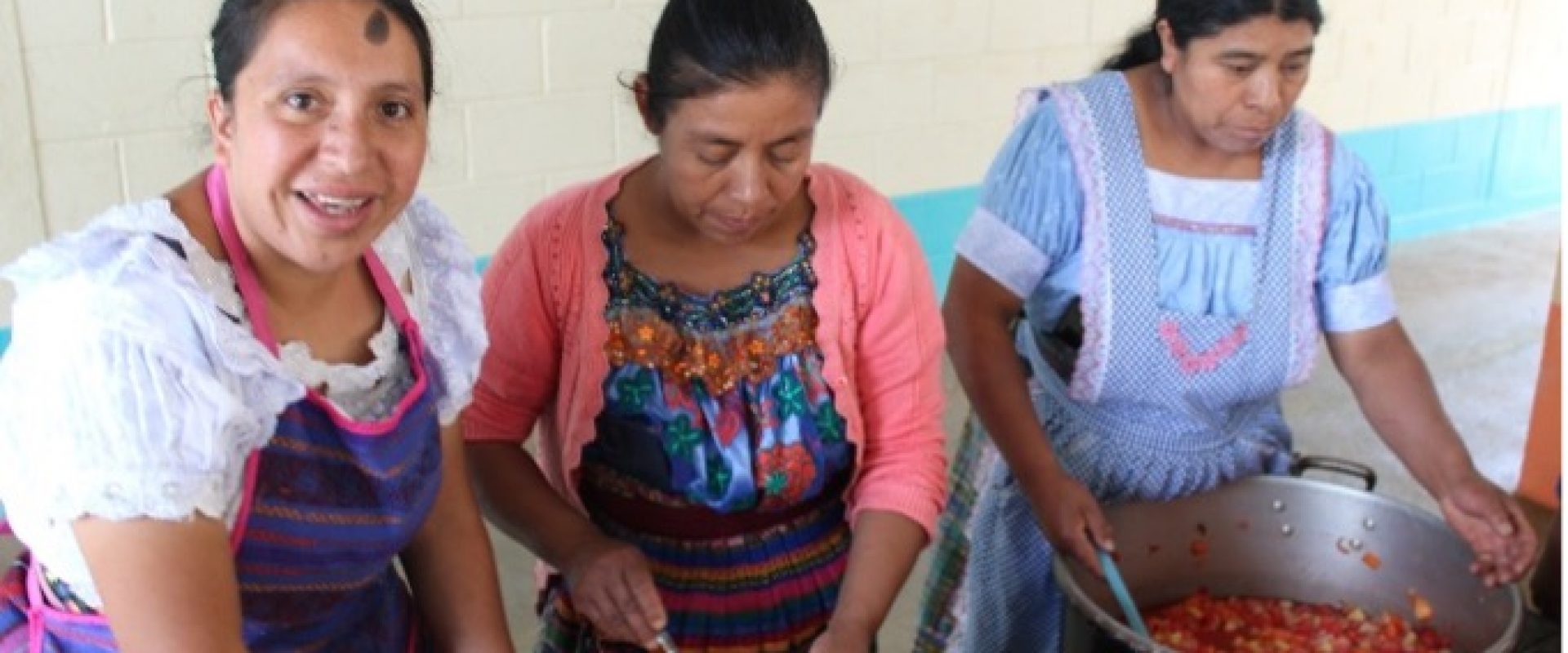
Education doesn’t stop at the classroom door. For children to truly thrive in school, they need support, encouragement, and engagement from home. But what happens when parents themselves never had the opportunity to attend school? How can they support their children’s education when they’re navigating unfamiliar territory?
This is where School the World’s parent education program makes a profound difference. Through our training sessions, we’re not just teaching parents about education—we’re empowering them to become active, confident advocates for their children’s learning journey.
For many parents in the communities we serve, the school environment can feel intimidating. María Castro, a mother participating in our program, shares how the training transformed her approach: “I have learned that I should support my son every day, send him to school at the time they told us, ask the teacher if my son is doing well, and if he does his homework.”
But perhaps even more powerful is the shift we see in parents’ confidence. Paulina Herlinda Carrillo Tipáz, 28, describes her transformation: “In the training sessions I learned not to be afraid of the teachers and to ask them how my children are doing in school. Before I didn’t do it, I was embarrassed and now I’m not. I no longer feel afraid, it’s a right that I have! Now I do dare!”
This shift from fear to empowerment is at the heart of what our parent training achieves. Parents learn that engaging with teachers isn’t overstepping—it’s their right and responsibility.
Education isn’t just about what happens at school; it’s about the conversations that happen around the dinner table, the questions asked after school, and the emotional support provided at home.
Marcela Caj Chen shares how the training changed her relationship with her son: “Before, I didn’t really know how to communicate with my son about what was happening at school. Sometimes he would come home quiet or distracted and I thought everything was fine. But with what I learned in the training sessions I understood that it’s important to talk with him every day, listen to him carefully and give him confidence so he can tell me how he feels.”
Now, their relationship has deepened: “He tells me about his joys, his worries and what he learns in class. I feel closer to him, and that has helped me better understand his emotions and support him in what he needs.”
Our training sessions also cover essential practical information that helps keep children healthy and in school. Roxana de León, 32, shares what she learned: “He [Kener, a Change Agent from STW] taught us that children should not miss school, because if they miss, they fall behind and can lose the grade. We also learned how important hygiene is and washing hands, so that they are clean. Money has many bacteria and this way we avoid illness.”
Understanding the connection between attendance and academic success, between hygiene and health, gives parents concrete ways to support their children’s education every single day.
One of the most significant shifts we see is parents understanding their role as partners in their children’s education—not just bystanders. Marcela learned about participating in reading projects: “Before I thought that only teachers should teach reading, but now I know that as a mother I also have an important role. I like to participate in reading activities because my son is motivated when he sees me involved. We read together at home, and that has strengthened our relationship a lot.”
This transformation from passive observer to active participant creates a ripple effect. When children see their parents engaged and invested in their education, they become more motivated themselves.
Many of the parents in our programs never had the chance to complete their own education. Their testimonies carry the weight of missed opportunities and the determination that their children will have different lives.
But what makes our parent training program so powerful is that it doesn’t just inspire hope—it provides practical tools. Parents learn specific ways to engage with schools, communicate with their children, and create home environments that support learning.
As Marcela reflects: “Now I feel more confident and prepared to accompany my son in his education. I have learned that communication, support, and participation are key for him to grow up happy and learn with enthusiasm.”
When we invest in parent education, we’re multiplying our impact. Every parent we train becomes an advocate for education in their home, their family, and their community. They model engagement for other parents. They create expectations that education matters. They build a culture where learning is valued and supported.
María Castro’s gratitude captures the essence of what this program provides: “Thank you School the Wrold for teaching me to ask how my son is doing in school!”
It’s a simple statement, but it represents a profound shift—from uncertainty to confidence, from distance to engagement, from passive to active participation in a child’s education.
That’s the power of parent education. And that’s why it remains a cornerstone of School the World’s holistic approach to educational access and quality.
We just reached a historic milestone! Thanks to our community of supporters and local partners, we’ve officially dedicated our 200th school in Central America.
This isn’t just about a building—it’s about 17 years of community-led transformation and the start of a five-year commitment to the children of Tululché II.
From Guatemala to the Philippines, our co-investment model ensures every dollar you give creates a self-sustaining foundation for education.