
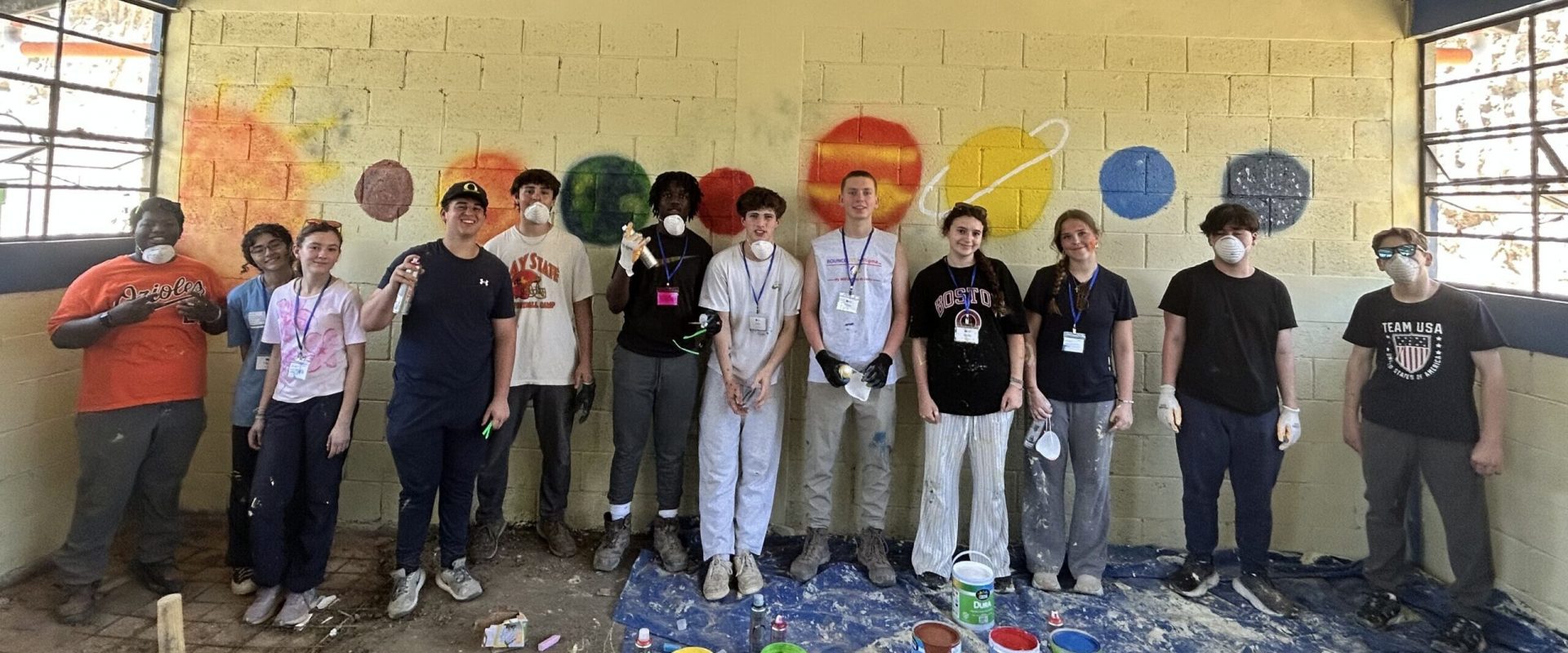
When parents tell us why they’re sending their teen on a service learning trip, cultural experience tops the list. They want their student to see how people live in other parts of the world, maybe practice some Spanish, build something tangible like a school or playground, make new friends, form connections with the local community, and—this one comes up often—complete those required service hours while gaining some appreciation for what they have.
All good reasons. All things that will happen.
But here’s what we’ve learned from watching students return year after year: something else is happening on these trips. Something deeper. And recent research on adolescent development—including a comprehensive report on raising generous humans—helps explain why these experiences stick with students long after they’ve turned in their service hour forms.
Every parent wants their teen to appreciate their advantages. You’ve probably tried the dinner table conversation: “Do you know how lucky you are to have [fill in the blank]?”
How’d that go?
Even our scholarship students come back transformed. They talk about finally understanding what it means to work hard for an education. About recognizing advantages they’d never considered: access to schools, resources, even the ability to travel at all. About opening their eyes to how big the world really is and what happiness looks like in places with far fewer material things.
One wrote: “This trip showed me how much the kids go through for an education. It made me want to go to school more.”
Another: “It helped ground me and bring back gratitude for what I have.”
They didn’t learn that from lectures. They learned it from working alongside families building their community’s first playground. From teaching in classrooms where students walk hours to attend. From sitting with teenagers their age who were making completely different calculations about their futures.
Research backs up what we see: talking about gratitude doesn’t create gratitude. Experience does. Specifically, exposure to people and communities different from your own builds empathy in ways that conversation simply can’t replicate.
Here’s what the research shows: adolescence—roughly ages 11 to 18—is what developmental scientists call a “sensitive period for social development.”
Your teen’s brain is uniquely wired right now to develop empathy, form their identity, and establish habits that will stick.
This isn’t just theory. The research shows that prosocial habits formed during adolescence compound over time. One longitudinal study found that people who engaged in regular service during their teen years were five times more likely to continue giving and volunteering as adults.
That’s not five percent more. Five times more.
Skills beget skills. The teenager who learns to see beyond their own experience now becomes the adult who stays engaged with their community later.
Plenty of things can fulfill service hour requirements. Sorting cans at a food bank. Picking up trash at a park. Those things matter.
But service learning trips do something different, and it comes down to three factors:
Students tell us about the moments that pushed them: Speaking Spanish even when they weren’t confident. Socializing with kids who may have endured trauma. Teaching in classrooms when they’re normally quiet. Mixing concrete in intense heat. Climbing steep hills to reach the community each day.
One typically quiet student wrote: “Coming here sort of forced me to interact with others. I have talked most in this week than I have any other week literally ever.”
When teens navigate unfamiliar situations—figuring out how to communicate across language barriers, problem-solving when plans change, deciding as a group how to organize the work—that’s agency in action. Research shows that when teens have meaningful choice and control in service work, engagement doesn’t just increase a little. It multiplies.
Building something concrete—a playground, a school, a community center—creates what researchers call “tangible impact.” At the end of the week, there’s a structure that wasn’t there before. Kids are playing on equipment the group built.
That direct connection between effort and outcome develops what psychologists call “efficacy”—the belief that your actions matter and you can make a difference. That’s not a participation trophy feeling. That’s a foundational life skill.
Peer influence peaks during adolescence. (You already knew that—you’ve watched your teen care more about what their friends think than what you think.)
But here’s what the research reveals: the quality of friendships matters enormously. Friendships based on shared meaningful work—not just shared interests or convenience—actually boost self-esteem, which in turn increases prosocial behavior. It’s a positive cycle.
When your teen makes friends while building a playground, they’re surrounding themselves with peers who reinforce the idea that service matters, that different perspectives matter, that showing up matters.
And those peer effects stick around long after the trip ends.
We’ve been running these trips long enough to know they’re valuable. Students come back changed—more grateful, more aware, more engaged.
But this research helped us understand why they’re changed, and more importantly, what makes the change last.
It’s not the cultural experience alone, though that matters. It’s not the service hours, though those count. It’s not even the specific project, though building something tangible helps.
It’s the combination: meaningful work + real challenge + prosocial peers + direct impact, all happening during the exact developmental window when these experiences shape who teenagers become.
We have alumni from trips ten years ago who now volunteer on our young professional council and return as chaperones because of how that original experience impacted them. Students pursuing nursing, education, and careers focused on helping communities—directly connecting their aspirations to what they saw and felt on these trips.
One recent participant wrote: “I have been changed in a way to want to help people in my future career.”
Another: “As I get older with my career, I would like to visit back to these communities and give back.”
And immediately after returning, students want to share what they experienced: recruiting other students, posting on social media, speaking about it in their schools and communities, continuing to volunteer. That’s not about checking a box. That’s about identity formation.
The research points to something worth considering: students who engage in service repeatedly—not just once—are significantly more likely to make it part of who they are as adults.
We love our repeat travelers, and now we understand better why those multiple trips matter. Each experience reinforces the previous one. The habits forming right now—during this narrow window of adolescence—are the habits that stick.
Yes, your teen will experience a new culture and complete their service hours. They’ll build something tangible, make new friends, and gain appreciation for what they have.
But when they’re pushing past their comfort zones, solving real problems alongside a community, and seeing the direct impact of their efforts—they’re not just checking boxes. According to the research on adolescent development, they’re building the habits, empathy, and sense of agency that shape who they become as adults. The kind that makes them five times more likely to stay engaged throughout their lives.
That might be even more important for their long-term learning than any of us realized.
Ready to learn more about our upcoming service learning trips? See our student service learning travel calendar dates.
Want to dive deeper into the research? Read the full report: Raising Generous Humans